Over the past two decades, Invisalign has revolutionized orthodontics, offering a discreet and comfortable alternative to traditional metal braces. Millions globally choose discreet aligners to straighten their teeth, correct spacing issues, and improve their smiles.
Understanding Jaw Alignment
Jaw alignment refers to how your upper and lower jaws fit together, also known as your bite. A proper bite allows for efficient chewing, clear speech, and even distribution of forces during biting. Misaligned jaws, often termed malocclusions, can lead to issues such as:
- Overbite or underbite
- Crossbite
- Open bite
- Jaw pain or temporomandibular joint (TMJ) disorders
- Excessive wear on teeth
The severity of jaw misalignment plays a significant role in determining the type of treatment needed. Mild jaw alignment issues may be corrected with dental appliances like Invisalign, while severe skeletal discrepancies might require more intensive interventions.
How Invisalign Works?
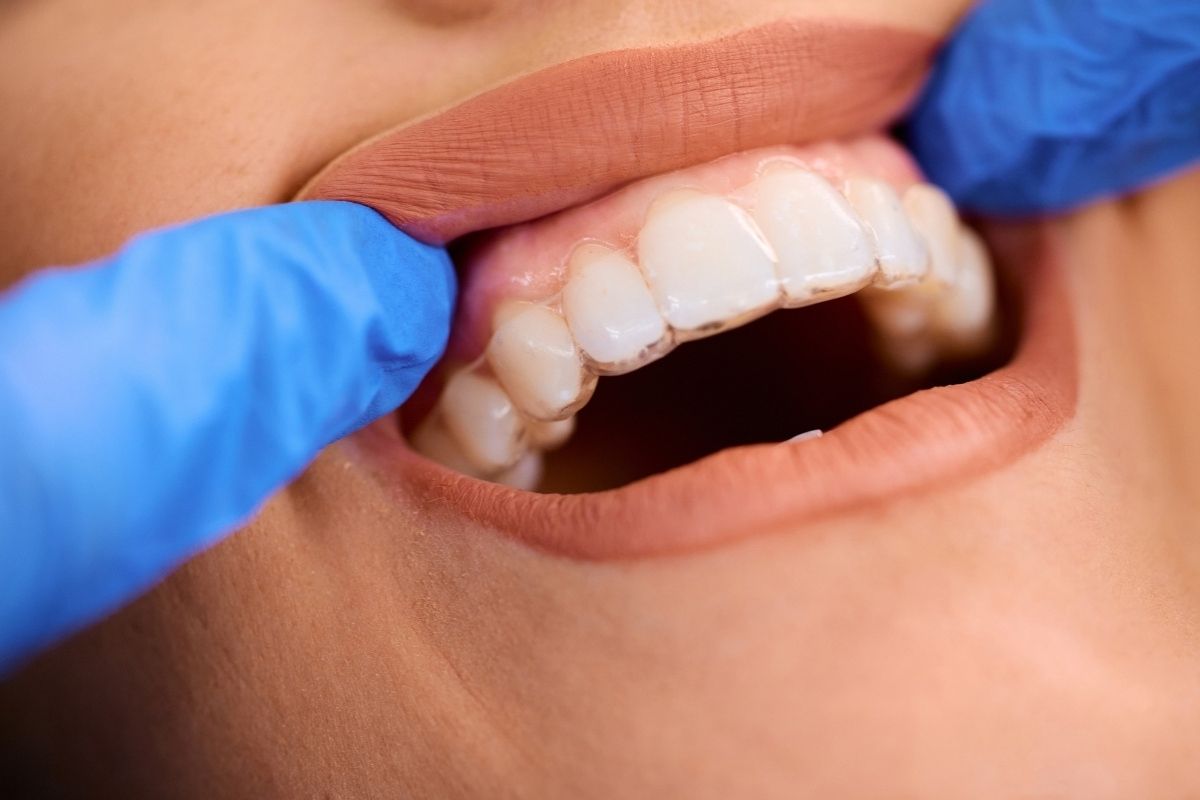
It uses clear, removable aligners to gradually shift teeth into the desired position. Each set is custom-made and worn for about 1–2 weeks before progressing to the next set. They apply gentle pressure on specific teeth, guiding them into a straighter and more functional alignment.
While a discreet aligner is highly effective for teeth straightening, its effect on jaw alignment depends on the type and severity of the misalignment.
Can Invisalign Correct Jaw Alignment?
1. Mild to Moderate Bite Issues
This orthodontic treatment can be an effective solution for mild bite issues such as slight overbites, underbites, or minor crossbites. Modern orthodontic technology includes precision attachments and elastics that can help adjust the bite by subtly repositioning the teeth.
- Overbite: Invisalign can gradually move upper teeth backward and lower teeth forward to improve bite alignment.
- Underbite: Clear aligners can shift lower teeth backward and upper teeth forward for minor underbite corrections.
- Crossbite: Aligners can help move teeth outward or inward to correct minor crossbites.
2. Severe Jaw Misalignment
In significant skeletal discrepancies, such as a severely protruding or recessed jaw, transparent aligners alone may not be sufficient. These conditions often require:
- Orthognathic (jaw) surgery
- Traditional braces in combination with surgical procedures
- Other orthodontic appliances are designed to reposition the jaw
In such cases, removable aligners may be part of a pre-surgical or post-surgical orthodontic plan, but they cannot independently correct severe jaw misalignment.
3. TMJ and Jaw Function
Patients with TMJ disorders or jaw pain sometimes wonder if Invisalign can help. While clear, transparent aligners may improve the bite and reduce uneven forces on the jaw, they are not a guaranteed treatment for TMJ disorders. A dentist or orthodontist may recommend additional therapies, such as:
- Bite splints
- Physical therapy for the jaw
- Pain management techniques
Advantages of Invisalign for Jaw Alignment
Even if a clear, removable aligner cannot fix severe skeletal jaw misalignment, it offers several benefits for mild bite adjustments:
- Aesthetic Appeal: They are nearly invisible, making them ideal for adults and teens.
- Comfort: Smooth plastic tooth straighteners are less likely to irritate gums or cheeks than traditional braces.
- Removable: Patients can remove them to eat, brush, and floss, ensuring better oral hygiene.
- Gradual Adjustment: The gentle pressure reduces discomfort and allows teeth to move naturally.
- Customized Treatment: Invisalign treatment plans are digitally designed to optimize tooth alignment and bite correction.
Limitations of Invisalign
While it offers significant benefits, it has limitations when it comes to jaw alignment:
- Cannot replace surgery for severe jaw issues
- Requires patient compliance: Aligners must be worn 20–22 hours per day
- Effectiveness is limited to teeth and minor bite corrections
- Longer treatment time may be needed for complex cases
Consultation with an Orthodontist
If you’re considering Invisalign to correct jaw alignment, the first step is a thorough consultation with a trustworthy orthodontist. They will:
- Evaluate the severity of your jaw misalignment
- Take X-rays and 3D scans of your teeth and jaw
- Determine whether modern orthodontics alone or in combination with other treatments is appropriate
- Create a personalized treatment plan
Proper evaluation ensures realistic expectations and optimal results.
Achieve Your Ideal Smile with the Right Treatment Plan
Invisalign is a highly effective solution for straightening teeth and correcting mild to moderate bite issues, including minor jaw alignment concerns. However, it is not a universal solution for all types of jaw misalignment. Severe skeletal discrepancies may require surgical intervention or traditional braces combined with other treatments.
Consultation with our experts is essential to determine the best action for your jaw health and smile aesthetics.
With guidance and a clear treatment plan from our team at Harvard Dental, removable aligners can help you achieve a healthier, more functional, and beautiful smile.
FAQs
1. Can Invisalign fix an overbite completely?
Invisalign can correct mild to moderate overbites. Severe overbites may require braces or surgical intervention.
2. Is Invisalign suitable for underbite correction?
Yes, mild underbites can be treated with Invisalign using precision attachments and elastics, but severe underbites often need surgery.
3. How long does Invisalign take to fix jaw alignment?
Treatment duration varies but typically ranges from 12 to 24 months, depending on the severity of the bite issue.
4. Can Invisalign help with TMJ pain?
It may reduce uneven forces on the jaw and improve bite alignment, but it is not a guaranteed TMJ treatment.
5. Do I need braces if my jaw is severely misaligned?
Yes, severe jaw misalignment often requires braces in combination with surgery for effective correction.
6. Are Invisalign results permanent for jaw alignment?
Results are long-lasting if you wear retainers as recommended. Without retainers, teeth may shift back over time.