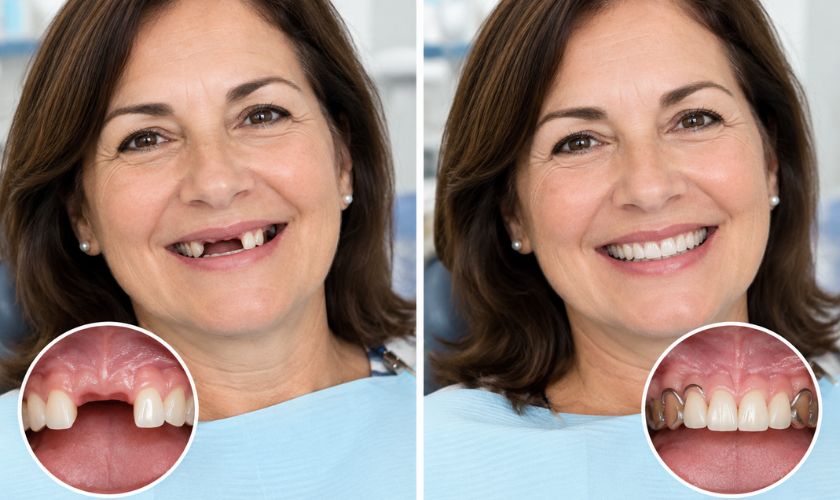
Losing several teeth can affect more than your smile. Missing teeth may make chewing difficult, influence speech, and leave you feeling less confident when talking or smiling. Partial dentures before-and-after results can help show how replacing missing teeth may improve both appearance and everyday function.
Partial dentures are designed for people who still have some natural teeth. They replace missing teeth with prosthetic teeth attached to a gum-colored base and may use clasps or other methods to stay securely in place.
What Can You Expect Before Partial Dentures?
Before treatment, gaps from missing teeth may be noticeable when you smile or speak. Depending on which teeth are missing, you may also experience difficulty chewing certain foods or changes in how your remaining teeth come together.
Your dentist will evaluate your remaining teeth, gums, bite, and overall oral health before recommending a partial denture. The design is customized to fit your mouth and complement your natural teeth.
For patients considering dentures in Tulsa, understanding the difference between the starting condition and the expected result can make the treatment process easier to understand.
Partial Dentures Before and After: What May Change?
The most noticeable difference is often the appearance of the smile. A well-designed partial denture can fill visible spaces and use artificial teeth that are shaped and colored to complement the surrounding teeth.
The benefits can extend beyond appearance. Replacing missing teeth may help restore chewing surfaces and support clearer speech. Patients may also feel more comfortable smiling and interacting socially after treatment.
However, results vary from person to person. The final appearance depends on the number and location of missing teeth, the condition of the remaining teeth, denture design, and individual anatomy. Harvard Dental showcases denture and partial denture cases demonstrating how restorative treatment can improve the appearance and function of a smile.
Adjusting to Your New Partial Denture
The first few days or weeks can involve an adjustment period. Your mouth needs time to become accustomed to the new appliance, particularly when speaking and chewing.
Beginning with softer foods and gradually introducing different textures can make the transition easier. Your dentist may also make adjustments if the partial denture feels uncomfortable or does not fit properly.
Good daily care is important as well. Cleaning the partial denture and maintaining your remaining natural teeth can help support oral health and the longevity of the appliance.
When Should You Consider Partial Dentures?
Partial dentures may be worth discussing if you have several missing teeth but still have healthy natural teeth that can remain. Your dentist can determine whether a removable partial denture, flexible partial, bridge, implant-supported option, or another restoration is more appropriate for your needs.
If you are unsure which option fits your situation, Contact Us to discuss your concerns and learn more about your treatment choices.
Frequently Asked Questions
- Do partial dentures look natural?
Modern partial dentures can be designed to closely match your natural teeth and gums. Their appearance depends on the materials, design, tooth shade, and how well the denture is customized.
- Will partial dentures improve my smile?
Partial dentures can fill visible spaces created by missing teeth, creating a more complete smile. They may also restore some facial and lip support lost after tooth loss.
- Can I eat normally with partial dentures?
Most people can eat many foods after adjusting to their partial dentures. Starting with softer foods and gradually adding firmer textures can help you become comfortable with chewing.
- How long does it take to adjust to partial dentures?
Adjustment times vary, but many people need several days or weeks to become comfortable. Speaking, chewing, and tongue movement typically improve as the mouth adapts.
- Can partial dentures replace back teeth?
Yes. Partial dentures can replace missing back teeth and restore lost chewing surfaces. The appropriate design depends on the location of missing teeth and the condition of the remaining teeth.
- How should I clean partial dentures?
Clean partial dentures regularly with a soft brush and non-abrasive denture cleaner. Avoid harsh products and hot water, which may damage or distort the appliance.
- Can partial dentures be adjusted if they feel uncomfortable?
Yes. Adjustments may be possible when a partial denture causes pressure or discomfort. A dentist can evaluate the fit and make appropriate changes based on your needs.
Regular dental evaluations can help ensure your partial denture continues to fit comfortably while your remaining natural teeth and gums stay healthy. If you are considering treatment, visit our dental office to discuss whether partial dentures may be suitable for your smile.