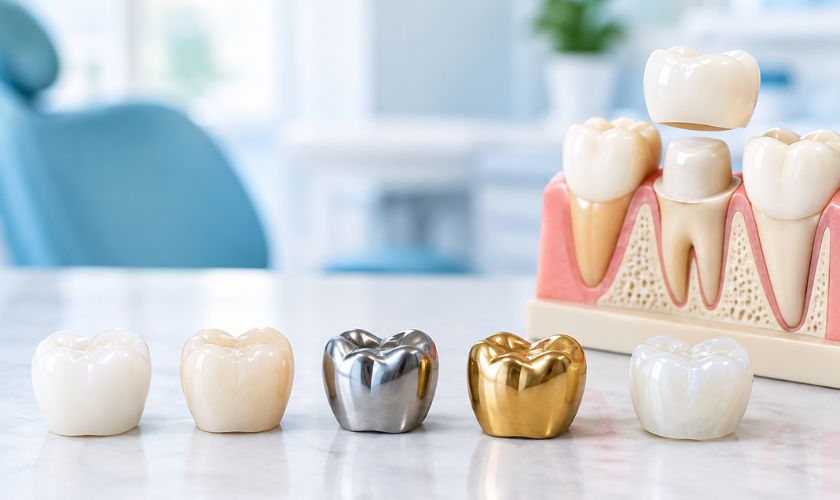
A dental crown is a custom-made restoration that fits over a damaged, weakened, or heavily restored tooth. Crowns can help restore a tooth’s shape, strength, function, and appearance. Because crowns are available in several materials, understanding the differences can help you have a more informed conversation with your dentist.
The right crown depends on factors such as the location of the tooth, biting forces, appearance, remaining tooth structure, and overall oral health. Modern dental materials offer options that balance durability and natural appearance.
1. Metal Crowns
Metal crowns are known for strength, durability, and resistance to chipping or breaking. Gold and other dental alloys have been used for many years and can withstand substantial chewing forces. They can also require less removal of healthy tooth structure compared with some other crown options.
The main drawback is their metallic appearance, which makes them more commonly considered for back teeth where appearance is less noticeable.
2. Porcelain-Fused-to-Metal Crowns
Porcelain-fused-to-metal (PFM) crowns combine a strong metal foundation with a tooth-colored porcelain exterior. This design provides a balance between strength and aesthetics and can be used for both front and back teeth.
One consideration is that the porcelain layer can chip over time, potentially exposing the metal underneath. PFM crowns can also affect opposing enamel depending on the restoration and how it is finished.
3. All-Ceramic or Porcelain Crowns
All-ceramic crowns are designed to closely resemble natural teeth. Their tooth-colored appearance and translucency make them particularly appealing when restoring visible teeth.
Ceramic materials include several types, and their strength varies. The American Dental Association notes that modern ceramic materials have different mechanical properties and clinical indications, so material selection should be based on the specific tooth and restoration requirements.
4. Zirconia Crowns
Zirconia is a ceramic material valued for its strength and durability. It has become a popular option for crowns, particularly where substantial chewing forces are involved. Modern zirconia materials are also available with improved translucency for a more natural appearance.
The ADA reports that zirconia is frequently used for posterior crowns and is also used for anterior restorations. The specific type of zirconia matters because strength and translucency can vary between formulations.
5. Pressed Ceramic Crowns
Pressed ceramic crowns use a ceramic core that is formed under high temperatures before additional ceramic layers are applied. These crowns can provide a natural-looking appearance because ceramic materials can reproduce some of the translucency associated with natural enamel.
They may be considered for both front and back teeth, depending on the material selected and the clinical situation.
6. Resin Crowns
Resin-based crowns are another option, although they generally have lower strength and durability than many modern ceramic or metal alternatives. Resin materials may be used for temporary restorations or selected situations where their characteristics are appropriate.
Your dentist can determine whether resin is suitable based on the tooth being restored, expected chewing forces, and the intended duration of the restoration.
How Do You Choose the Right Dental Crown?
Choosing a crown is not simply about selecting the most attractive material. Your dentist will consider the tooth’s location, how much healthy structure remains, your bite, cosmetic expectations, and the forces placed on the tooth.
For patients considering a dental crown in Tulsa, discussing these factors during an examination can help identify an appropriate restoration. Harvard Dental can evaluate the tooth and explain the advantages and limitations of the available crown materials.
Good oral hygiene remains important after crown placement. Brushing twice daily, cleaning between teeth, and maintaining regular dental visits can help protect the crowned tooth and surrounding gums.
If you have a damaged, cracked, weakened, or heavily restored tooth, Contact Us to discuss whether a crown may be appropriate for your situation.
For an evaluation of your tooth and available restoration options, visit our dental office to discuss your needs with a dental professional.
Frequently Asked Questions
1. What is the most durable type of dental crown?
Metal and zirconia crowns are known for high strength and durability. The best choice depends on the tooth’s location, biting forces, available tooth structure, and your dentist’s clinical assessment.
2. Are porcelain crowns strong enough for back teeth?
Some modern ceramic crowns are designed for posterior teeth, but strength varies by material. Your dentist can recommend a ceramic option based on your bite and the amount of chewing force.
3. What are zirconia crowns made from?
Zirconia crowns are made from zirconium dioxide, a ceramic material. Modern zirconia can provide substantial strength while offering improved translucency compared with earlier formulations.
4. How long can a dental crown last?
Crown longevity varies according to material, oral hygiene, bite forces, tooth condition, and maintenance. Proper care and regular dental examinations can help identify problems early.
5. Are metal crowns still used today?
Yes. Metal crowns remain an option because they are strong, durable, and resistant to chipping. Their metallic appearance, however, may make them less desirable for visible front teeth.
6. Can crowns improve the appearance of damaged teeth?
Yes. Tooth-colored crowns can restore the shape, color, and overall appearance of teeth that are severely damaged, worn, discolored, or weakened.
7. How do I know which crown is best for me?
The ideal crown depends on your tooth’s location, condition, bite, cosmetic goals, and restoration requirements. A dental examination helps determine which material is most appropriate.